
Sunday, November 27, 2005
Overheard, Sunday morning
Well-dressed middle-aged señora to her Chihuahua as he lifts his leg and pees on the corner of the San Andres church: "¡Así me gusta!" ("That's the way I like it!")


Friday, November 25, 2005
Merry merry

There is no Santa Claus. They do not decorate Christmas trees, nor do they give presents on Christmas day. They do not hang stockings or blast popped-up versions of Christmas carols through their department stores. They do not eat candy canes.
At least not naturally: none of these traditions is remotely Spanish. But all of them have been making inroads into cultural life here, one more example, for good or ill, of the globalization of American culture. Happily, the infiltration of American-style holidays does not mean that Spanish traditions disappear. They just get added on: more ways to have a good party.
The process, however, is not always seamless. Hence my amusement this morning at the paper store, when I saw the sign above, which translates roughly as "We've got the Christmas of Christmas." An utterly confusing phrase--are they saying that their Christmas is the best of all possible Christmases?--until I realized that "Christmas" is the word for "Christmas cards." How "Christmas" came to mean "cards" and not trees or stockings or candy canes or any other holiday-related import remains a mystery.
Thursday, November 24, 2005
Six degrees
One thing of which I was reminded on this last trip to the molino was that everyone in Oviñana has a stake in it. We first encountered the phenomenon on our second night there, when, in a fit of naive confidence that we could somehow get the electrical system to work if only we understood it better, we called up the electrician that the previous owners recommended, and invited him over. Manolito was a very chatty guy, who, in between discourses on amps and watts, mentioned that he had help raise the millstone that functions (or used to function. An errant bottle of sidra broke the glass top, but that's another story) as a kitchen table. Later we found out from our albañil, José María, that the millstone was right where it had always been and Manolito had nothing to do with raising it or anything else. But the pattern was set.
Now, everytime I'm up there I seem to run in to someone who has some connection to the place. There was the town drunk who showed up with our furniture delivery, saying that he was "strong as a toro bravo" and that he helped lay out the stone patio. There are random guys in the café, who periodically remember that they helped re-do the walls or put on the roof. There is Alberto the Carpenter's wife (Alberto being the one who built all the cabinetry we'd like to tear out), who told me that before David and Mari Paz owned the place, a homeless man and his burro lived there. And before that, it belonged to her mother, who was born in the molino.
Then, last week, in the process of collecting permissions, we met Nelli, who turns out to be the mother of Eduardo, who runs the construction supply store where we got the tiles for our new bathrooms. Nelli says HER mother was born in the molino. Which either makes Nelli and Alberto's wife sisters, or makes for a very strange coincidence.
Now, everytime I'm up there I seem to run in to someone who has some connection to the place. There was the town drunk who showed up with our furniture delivery, saying that he was "strong as a toro bravo" and that he helped lay out the stone patio. There are random guys in the café, who periodically remember that they helped re-do the walls or put on the roof. There is Alberto the Carpenter's wife (Alberto being the one who built all the cabinetry we'd like to tear out), who told me that before David and Mari Paz owned the place, a homeless man and his burro lived there. And before that, it belonged to her mother, who was born in the molino.
Then, last week, in the process of collecting permissions, we met Nelli, who turns out to be the mother of Eduardo, who runs the construction supply store where we got the tiles for our new bathrooms. Nelli says HER mother was born in the molino. Which either makes Nelli and Alberto's wife sisters, or makes for a very strange coincidence.
Sunday, November 20, 2005
Like Sheep

It is the thirtieth anniversary of the death of Francicso Franco, Spain's former dictator.
It is also the annual Día de la Transhumancia, when the country's agricultural sector asserts its rights by herding livestock (mostly sheep) through the center of Madrid--along the Calle Mayor, through the Puerta del Sol, to the Puerta de Alcalá, and then back again.
Last night, a Mass was held at the Valle de los Caidos, or Valley of the Fallen, the massive basilica/shrine built through enforced labor by the losers of the Spanish Civil War, during nearly two decades, to honor Franco. The dictator is buried inside the church, as is José Antonio Primo de Rivera, founder of the Spanish Falange, a right-wing political group that supported Franco's Nationalists during the civil war. Notable attendees of the gathering included Franco's daughter, Carmen, and Antonio Tejero Molina, the Guardia Civil officer who led the 1981 military "golpe" or coup that attempted to topple Spain's then-nascent democracy. Today's news replayed the chants of "Franco! Franco!", and the Fascist salutes.
This morning during my weekly Sunday run, as I crossed the mouth of the Calle Mayor, I had to jostle for position with teams of oxen, impatient to execute their marching orders.
Later this morning, we had breakfast at the Cafe del Oriente.
Outside, in the Plaza del Oriente, which spreads out in front of the Royal Palace, several hundred Spaniards--mostly well-off elderly citizens or angry young people--congregated to pay homage to Franco by singing patriotic songs, chanting nationalistic slogans, stabbing the air with fascist salutes, waving (and often actually wearing) Spanish flags, and selling Francoist and Falange literature and memorabilia.
After we finished breakfast, we made our way through the chants and flags and walked the short distance to the Puerta del Sol, so that we could observe the animals on their home stretch. Before us passed men carrying flags on thick wooden poles several times their height; oxes pulling carts; groups of men, women, boys, and girls dressed in traditional attire, stopping intermittently to perform folk dances; large, swaggering, forlorn sheepdogs; and finally, the guests of honor--hundreds of confused sheep, herded through the passageway narrowly permitted by the hovering crowd.
The sheep's appearance, though glorious, was brief, and soon the Puerta del Sol had emptied, leaving only an army of sanitation trucks and workers (all dressed in bright, flourescent green uniforms), hosing the cobblestone streets and dispensing with the formidable splattering of sheep dip.
Saturday, November 19, 2005
Love the One You're With
Late Saturday afternoon, back in Madrid after four days at the Molino.
I never tire of the contrast between urban Madrid and rural Asturias. Madrid: heat and noise rising; Asturias: dampness and quiet descending. Madrid: large gatherings of people, swift mobility, heels on sidewalks, a whirl of lights at night, hard edges; Asturias: pairs and solitary figures walking tree-shadowed roads, leisurely paces, the soft earth below muffling all movement, endless darkness at night--introducing a billion trillion brightly precise stars when the sky is clear, easy curves.
This trip was relatively uneventful, in the sense that no catastrophes befell us. We rounded up the final permissions forms from neighbouring landowners and transfered the money to Viesgo, the electric company, with its assurance that work would begin within the week (or perhaps the week after...), so we should actually have electricity at the Molino the next time we head north. We've lined up an electrician to make peace between the new powerlines and the ancient and idiosyncratic wiring inside the Molino. And we learned just this morning, as we were preparing to leave, how to clean the pipe filters so that our connection to Oviñana's water supply flows with enough force to get the showers and sinks upstairs working.
The mold and mildew was legion, as always, and my guess is that we'll never defeat it. But can we somehow embrace it?
Except for the concern about how the place will look when family and friends start visiting in the spring, we enjoyed ourselves more fully this visit because our expectations seemed better matched to what we experienced.
No matter how bad things have been, or how forcefully Lisa has insisted we have to sell the place, I fall in love with the Molino every time I go. Whatever's wrong with the place, it's not the Molino's fault, I tell myself. Just because previous owners have made bad decisions about it doesn't mean I should hate it. If I got a pound dog who'd been abused by his former masters, it wouldn't occur to me to blame the dog. So with the Molino. In fact, I feel very protective of this strange, mysterious beast--moreso each time I go.
For good or ill, I think I'm a friend for life.
I never tire of the contrast between urban Madrid and rural Asturias. Madrid: heat and noise rising; Asturias: dampness and quiet descending. Madrid: large gatherings of people, swift mobility, heels on sidewalks, a whirl of lights at night, hard edges; Asturias: pairs and solitary figures walking tree-shadowed roads, leisurely paces, the soft earth below muffling all movement, endless darkness at night--introducing a billion trillion brightly precise stars when the sky is clear, easy curves.
This trip was relatively uneventful, in the sense that no catastrophes befell us. We rounded up the final permissions forms from neighbouring landowners and transfered the money to Viesgo, the electric company, with its assurance that work would begin within the week (or perhaps the week after...), so we should actually have electricity at the Molino the next time we head north. We've lined up an electrician to make peace between the new powerlines and the ancient and idiosyncratic wiring inside the Molino. And we learned just this morning, as we were preparing to leave, how to clean the pipe filters so that our connection to Oviñana's water supply flows with enough force to get the showers and sinks upstairs working.
The mold and mildew was legion, as always, and my guess is that we'll never defeat it. But can we somehow embrace it?
Except for the concern about how the place will look when family and friends start visiting in the spring, we enjoyed ourselves more fully this visit because our expectations seemed better matched to what we experienced.
No matter how bad things have been, or how forcefully Lisa has insisted we have to sell the place, I fall in love with the Molino every time I go. Whatever's wrong with the place, it's not the Molino's fault, I tell myself. Just because previous owners have made bad decisions about it doesn't mean I should hate it. If I got a pound dog who'd been abused by his former masters, it wouldn't occur to me to blame the dog. So with the Molino. In fact, I feel very protective of this strange, mysterious beast--moreso each time I go.
For good or ill, I think I'm a friend for life.
Tuesday, November 15, 2005
Eating: Anarkoli
I have a long history with Indian restaurants in Madrid, mostly unsatisfying. On my very first trip to Spain, they were something of a refuge, one of the few kinds of places where a 19-year-old American girl might feel comfortable eating by herself (Chinese restaurants filled the same function; other foreigners, I figured would be less likely than Spaniards to wonder at the social worth of a person clearly so unpopular as to be unable to find someone to eat with her). But the food was never very good.
That changed when Geoff introduced me to Annapurna, a very upscale restaurant near Alonso Martínez. Annapurna is credited with being the first place to introduce upscale madrileños to upscale Indian cuisine. It's easy to see why they would like it: very heavy on the cream, nothing very spicy, lots of hushed, subservient waiters. But servings are small, prices high, and there were far too many people in business suits smoking cigars. Plus, both times I've been there, the hostess was rude.
For awhile we used to go out to Mombai Masala on Recoletos after yoga. Decor: Raj fantasy, food: decent, prices: high. Isn't the whole point of Indian that it's good and cheap?
So I'm happy to say that last week we found our perfect Indian restaurant: Anarkoli. Just opened, on a street that already has a string of Indian places. Warm, not terribly Indian-looking decor, nice waitresses, reasonable prices. And the food is excellent. The samosas are light, flaky, and dusted with chile-salt mix. Saag aloo still has its distinct components; the spinach bright green, with a few tomatoes thrown in for color, the sauce rich but not greasy. And the butter chicken--all white meat, nothing to leave you worrying about what parts you're eating-- was just plain delicious.
Anarkoli: c/Lavapies, 46
91467 6000
That changed when Geoff introduced me to Annapurna, a very upscale restaurant near Alonso Martínez. Annapurna is credited with being the first place to introduce upscale madrileños to upscale Indian cuisine. It's easy to see why they would like it: very heavy on the cream, nothing very spicy, lots of hushed, subservient waiters. But servings are small, prices high, and there were far too many people in business suits smoking cigars. Plus, both times I've been there, the hostess was rude.
For awhile we used to go out to Mombai Masala on Recoletos after yoga. Decor: Raj fantasy, food: decent, prices: high. Isn't the whole point of Indian that it's good and cheap?
So I'm happy to say that last week we found our perfect Indian restaurant: Anarkoli. Just opened, on a street that already has a string of Indian places. Warm, not terribly Indian-looking decor, nice waitresses, reasonable prices. And the food is excellent. The samosas are light, flaky, and dusted with chile-salt mix. Saag aloo still has its distinct components; the spinach bright green, with a few tomatoes thrown in for color, the sauce rich but not greasy. And the butter chicken--all white meat, nothing to leave you worrying about what parts you're eating-- was just plain delicious.
Anarkoli: c/Lavapies, 46
91467 6000
Sunday, November 13, 2005
We Gather Together
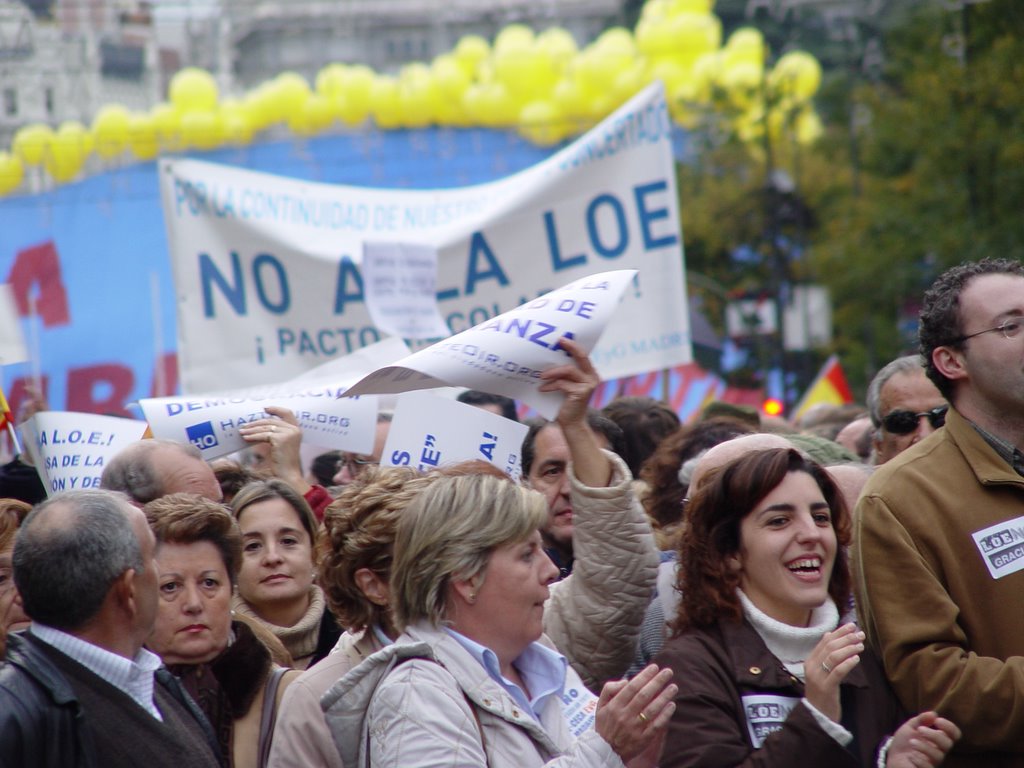
Spaniards like to gather. Usually there’s no more serious purpose to it than simply being with other people—eating, drinking, talking, and talking some more. This makes public demonstrations in Spain both more and less interesting than in the United States. An American political protest is usually something you notice. In Spain, you’d probably notice it, but it may take you a few minutes to be sure that you’re not confusing it with one of the other myriad gatherings you regularly encounter.
Yesterday, at the urging of the Catholic Church (THE Church here for centuries—and still hanging on) and the conservative Popular Party, between five hundred thousand and one and a half million people (depending on who did the counting) gathered at five o’clock in downtown Madrid, near Neptune’s Fountain, to march in protest, up the Paseo del Prado, to the Plaza de Independencia.
We knew this was more than a casual social gathering, if only because of the countless placards. What were all of these Spaniards protesting? The Ley Orgánica de Educación (LOE), the government’s new education law. Why were they protesting this law? We were actually covering this event for an assigned news story, so it should have been clear to us. But from the dozens of times we asked protestors why they were opposed to the LOE, we never got a coherent explanation.
The Spanish government has supported the Catholic Church forever, including paying tens of thousands of clerics to teach required religion classes in the public schools, and only after the government changed hands—from the Popular Party to the Socialists, has this cozy dependence come under public scrutiny.
So this law must be the Socialists’ way of getting religion out of the schools, right? One would think. But this legislation—a close version of which the PP itself put in place before it left office—ensures that every child who attends a public school will be guaranteed the choice to either take a religion class or not. And it stipulates that both the teachers and content of the religion classes will be determined by the Catholic Church. Best of all, the government will foot the bill.
So what’s to protest, you might ask. (If this law were on the table in the U.S., wouldn’t the religious right praising the heavens for its divine mission accomplished?) Well, it seems that in Spain, there is something about meddling with religion in public schools that just won’t do.
Or that yesterday’s event was really less protest than posture, less inspired crusade than plain old gathering. The language of politics certainly seemed to fill the air…in platitudes blared from a monstrous sound system along the route, and on signs carried by thousands upon thousands of marchers. But after attending the rallies after the terrorist attacks, this march seemed like a poorly run carnival, without enough food or stuffed animals to compensate for a lack of deeply shared public feeling.
After making its short way from the beginning to the end of its designated route, the crowd had nowhere to go, and for the better part of an hour, we were stuck together like a huge ball of rice. And although the popular music playing over the loudspeakers made things a little better, the song list seemed remarkably odd: Pink Floyd’s “Brick in the Wall” (“We don’t’ need no education…”)? R.E.M.’s “Losing My Religion”?
Trying to make the best of the situation, I kept shooting photos for the story we’d eventually have to file. But it wasn’t long before I felt like I a photographer hired for some rich child’s Saturday afternoon birthday party. The kids, talking in groups with friends and a lot of balloons, spent most of their time dancing and singing to the music, and only during the occasional moment when I, or another press photographer, would point the camera in their direction, did they begin suddenly to blow their party horns, raise their protest signs, and scream memorized chants about the horrors of the LOE. It had the drama of a puppet show (the children’s parents pulling the strings).
Participation in the democratic process is good, one of the things I’ve most admired in Spain in recent times (democracy has certainly been more genuinely operative here than it has in the U.S., for example). But this episode—an example of something the U.S. does in fact seem to have figured out (in this case, the separation of church and state)—left me a little depressed.
After a while, as the afternoon became night, the crowds melted away, heading towards the bars, cafes, and restaurants of the surrounding neighborhoods. And except for the notable fleet of water-spewing trucks and green-suited sanitation workers that materialized to clean up the mess, it seemed like any other Saturday night in Madrid. Everywhere you looked, people were eating, drinking, and talking. Everywhere you looked, Spaniards were gathering.
Thursday, November 10, 2005
Dia de la Almudena

The first clue should have been the cathedral bells that started clanging just before 10am. I went out to the street, thought to myself, "hmm, the museum isn't open yet," but figured that the guard had overslept. Went to the bakery, noticed that the shelves were full of a roscon-like pastry with little cream crosses drawn on it, and thought, "there must be a holiday coming up." But it wasn't until I got to the market and saw the big metal gates drawn across the entryway that I realized that the streets were suspiciously quiet for a Wednesday morning. Aha. The holiday was today. But what holiday was it?
Saint Isidro. Virgin of La Paloma. Constitution Day. Armed Forces Day. Assumption Day--although we're used to the regular eruption of esoteric holidays here, they still amuse us. I thought we knew them all. But no. Yesterday was Dia de la Almudena--the patron Virgin of Madrid. Of course.
So we went: Dia de la Almudena is celebrated with a huge Mass in the Plaza Mayor. Cardenal, bishops, priests, noviates, all lined up in neat rows, with nuns guarding the host back stage. The non-clerics get to dress up too: women in their tight castizo dresses, with that goofy carnation on top of their head; men in their far more elegant capes. They go to Mass, they take the Virgin out in a procession, everyone goes out for vermouth. Another successful holiday, with all the critical elements: costumes, a little religious devotion, plenty of alcohol.
Tuesday, November 08, 2005
Neighbors, Part II
Spent the weekend once again trying to track down the neighbors who own the land where our electrical posts will go. And, through gossip and actual encounters, I learned a lot in the process: that the head of the water mafia in town, whom everyone seems to hate, is not terribly well-educated: he spells "Nieves" with a "B"; that the monstrosity going up near Cesar's house was supposed to be a new home but has since been turned into an insurance office; that the father of Eduardo, the construction-company's owner, is a lawyer; that Emilio, who owns the tiny grocery in town, might be something of a political counterweight to Alfonso, owner of the tobacco shop.
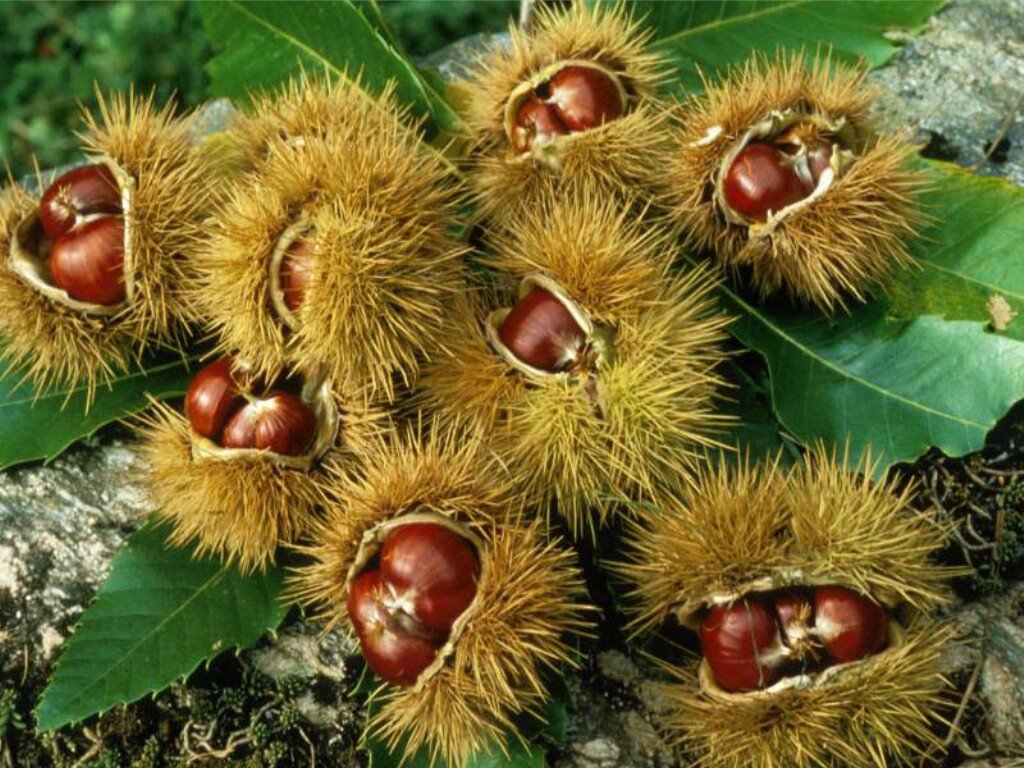
It's chestnut season in Asturias, and everywhere old men and women stand hunched on the side of the road, with sacks and baskets for collecting. And at the neighbors' houses too: wooden boxes filled with shiny chestnuts left to dry a bit in the sun. Back at the molino I collected a bowlful myself, pulling back the burrs that look like prickly golf balls to reveal the trio of nuts inside.
Friday, November 04, 2005
Staying: Asturias Airport

So I get to the airport at 4:45 for my 5:25 Iberia flight, thinking I'll just swipe my card through the automatic check in and be on my way (to Asturias). But no, the machine swallows the card, then spits it out, swallows, spits, swallows, spits, before telling me it can't read it. I try entering my passport number. "No Reservation Found". So I try another machine, to no avail. The lines at the counter are monstruous, too long for me to wait in and still make my flight. I go to an agent who is supposed to help passengers use the automatic check-in machines. I explain my plight; her response is to try the machine again. When she is satisfied that I am neither lying nor an idiot, she tells me to go stand in one of the monstrous lines. I explain that if I do that, I won't make my flight. She tells me she can't do anything else: her job is to help people with automatic check in.
I see that the lines for Business Class are much shorter, so, with about 20 minutes until my flight leaves, I choose one to stand in. When I get up to the counter, the man taps on his computer until he discovers that my ticket is coach. "This is a coach ticket," he says. I reply that I am aware of that fact, but that my flight leaves in 15 minutes, and the machine doesn't work and the lines..." He tells me he can't check me in: his job is to check in people in Business Class.
He then points me to two counters at the end of the terminal for "Last Minute" flights. There are two lines, each 3 deep with very antsy people, but there is only one agent, working very, very slowly. When I finally get up to him, he chides me for getting to the airport so late, but hands me my boarding pass. I speed off through security, pissing off a security guard and lots of other Spaniards by jumping the line. I get to the gate with about 4 minutes to spare. The agent there is talking at length to another passenger. I try to interrupt (politely, of course). She snaps at me and tells me to wait until she is done. When she finally turns to me, she has adopted the tone of voice that one would use with a very naughty, if tragically slow, child. "The plane," she says, "has already left."
She sends me to the Transit counter, where the line is, if anything, even longer than the original check-in lines. I stand there, along with a seething mass of Germans, Swedes, French, and the odd Spanish--who know better and keep trying, with more or less success, to jump the line, for about an hour. Finally, an agent takes my now-useless boarding pass and says, "let me get you a boarding pass for the next flight." I am joyous. For about 10 minutes, until it becomes clear that she is not, in fact, doing anything of the sort. After another 20 minutes or so of just standing there, another agent, newly arrived, waves me over. I hand her the same now really useless boarding pass. She types away for a bit, then tells me she can't give me a new boarding pass: her job is to give boarding passes to people who are connecting from other flights.
I go to the sales desk. The woman there, the only sympathetic person I've met in this whole ordeal, tells me she can only sell me another ticket for an additional 170 euros. But she does suggest I talk to a supervisor.
I go find the supervisor who is busily typing at a computer. I stand there for 15 minutes until she is done. I tell her the whole saga. She issues me a boarding pass for the next flight. It is, of course, delayed, meaning I get to Asturias far too late to pick up the car (which is still at the shop where I left it, shattered of window, back at the beginning of October). Which is how I came to spend the night at the Hotel Cristal, conveniently located in what is basically the Asturias Airport parking lot.
It's funny: the Spanish are so famously independent, so "viva yo," and all that. But give them meaningless bureaucracy and they'll enforce it for all they're worth. On the positive side, my Spanish really came together during my tirades.
Thursday, November 03, 2005
Staying: Barcelona
I found myself having unexpectedly to spend the night in Barcelona last week on what was apparently Catalan 99.5% Hotel Occupancy Day. After calling around to many, many places, including my favorite hotel in the city, I finally managed to secure the very last room in Barcelona at the Hotel Abba Sants. Not the sort of place I would normally go: big, ugly exterior; lots of businessmen. But it turned out to be relatively nice, modern but not too cold, with a very kind receptionist who patiently tried to come up with a phone charger for me, even though in my bleary state I kept erroneously insisting that the make of my mobile was Movistar ("Not the service, señora, the telephone").
It's located right near the Sants train station, which makes it a good place for getting in and out of town. And it's a short uphill walk away from the L'Illa Diagonal mall, which has a wonderful--I can't believe I'm saying this--food court, half inviting, gourmet-y restaurants, half food stands and cookware stalls. Fresh fish and produce, beautifully displayed, in a mall. Plus a FNAC, which, should anyone besides me be interested, sells phone chargers.
Monday, October 31, 2005
It's A Girl

Spain awoke to the news that it had (another) heir: early this morning Letizia gave birth to Leonor, who, according to her grandmother the queen, is healthy, chubby, and a "llorona," --a wailer. Leonor's birth will eventually occasion a reform of the constitution so that women have equal rights to the throne, but that is some time off in the future. For now, a few interesting facts about royal births:
All Spaniards have identification numbers that they use as a combination social security/driver's license number. The "DNI," as it is called, is necessary for everything from paying taxes to setting up a phone account to booking a plane ticket. For most, the number is 8 digits long, but the royal family has the market on the easily-remembered numbers 1-50. The king is 1, the queen is two, and so on through their children and grandchildren. Which makes Leonor #12.
And a little history: Victoria Eugenia, the English-born wife of Alfonso XIII, was the last Spanish queen to give birth in the comfort of her own palace. Apparently, her 12-hour labor was especially arduous, but every time she cried out, her mother-in-law, the Queen Mother, would scold her, "We Spaniards do not scream when we bring a king into the world."
Sunday, October 30, 2005
He Seemed Like Such a Nice Boy

On Thursday in Calella de Palafrugell, all the talk was of Tano, the local bar-owner/artist who was apparently in cahoots with the second-most wanted Nazi in the world. In June, Tano received a wire-transfer for some 170,000 euros from the son of Aribert Heim (also known as "Dr. Death") that, according to the artist, was payment for some paintings. At a sandwich shop just off the beach, Pilar and Lola talked at length about what a great guy Tano is: friendly and kind and a regular in their Tai Chi class. Pilar thought he was in a photo she had, but wasn't sure. And then she said that she had heard he and his wife had bought a huge house in Palafrugell. "So you never know," she sighed.
Saturday, October 29, 2005
Eating: El Cisne Azul

After being turned away from an Indian restaurant at 3:35 because the kitchen was "closed" (closed? at 3:35? in Madrid?), my friend Sam and I ended up eating bad-but-expensive sushi for lunch on Wednesday. And not enough of it either, because on the way home we ended up stopping for a dessert of sauteed mushrooms.
Sam had seen the place before, and although he knew it specialized in mushrooms, he had never eaten there. We went in, and it looked for all the world like your typical ca. 1976 Spanish bar, with bad lighting and blaring tv, formica floors covered in used napkins, and turquoise tiles (we later learned the bar is called The Blue Swan, at which point I understood the tiles to be an illustrative touch, though I still have no idea where the swan comes in) covering the walls. The only decoration, such as it was, were the laminated charts depicting wild mushrooms stuck randomly on the door, behind the bar, in the window.
The tapa display case held plates of trompettes de la mort, shitake, hen of the woods, and some irregularly-shaped mushrooms that the Spanish call cow's tongues. We argued about whether boletus in Spanish are porcini in Italian, then ordered them anyway. Sauteed with garlic until they were brown around the edges, a fried egg sitting on top, they were utterly delicious.
Meanwhile, in a corner of the bar, a group of ten men were finishing lunch. Cigars were out, talk was raucous, and there were two open bottles of Ballantines on the table as digestif. As one of the men got ready to leave, he pulled the waiter over and whispered instructions. Seconds later, the waiter came back with a large crate of boletus (which are indeed porcini, and cepes, for that matter), a thick layer of dirt still clinging to their fat stems. He pulled out a couple--they were huge--weighed them, and dropped them into a plastic bag for the man to take home.
The Cisne Azul, c/Gravina, 19; tel. 915213799
Wednesday, October 26, 2005
War Counsel
I spent a few hours yesterday with the folks at the Fundación Francisco Franco. Their offices were much as you'd expect: dark and a bit musty, walls hung with faded tapestries and flags; a paneled board room with a floor-to-ceiling portrait of the Caudillo dressed in full regalia. And the Foundation officers also what you'd expect: elderly, gracious, rather tenaciously nostalgic.
One of the most interesting things to come out of the meeting was the correspondence they showed me between Franco and Lyndon Johnson. It seems that the US president had asked the Generalísimo to send Spanish troops to support the American ones in Vietnam. And Franco's reply was, well, insightful:
Someone should have shown that letter to Aznar.
One of the most interesting things to come out of the meeting was the correspondence they showed me between Franco and Lyndon Johnson. It seems that the US president had asked the Generalísimo to send Spanish troops to support the American ones in Vietnam. And Franco's reply was, well, insightful:
"My military and political experience allows me to appreciate the great difficulty of the enterprise in which you are engaged: guerrilla warfare favors the indigenous insurgents, who with very few men can keep contingents of better-armed troops in check. ...War in the jungle is an affair without end.
"I don't know Ho Chi Minh personally, but from his history and his efforts to throw out the Japanese, the Chinese, and the French, we must credit him with being a patriot....Without a doubt, he could be the man that, at this time, Vietnam needs."
Someone should have shown that letter to Aznar.
Sunday, October 23, 2005
Winter
When I left Spain at the beginning of October, it was hot and everyone was still wearing sandals. Two weeks later it is still pretty damn warm, but clearly, the collective consciousness-- if not the actual season--has turned, and we are in winter. You can tell because even though I was almost sweating in a suede jacket this morning, everyone around me had on sweaters and scarves and was crossing the Plaza de Oriente like it was frozen tundra. And yesterday, the tables at San Gines were once again full of people drinking hot chocolate.
Another sign of winter: huesos del santo, little sugar-coated marzipan cookies that they make for All Saints Day. The holiday isn't until November 1, but in a bit of American-style commercialism, my bakery has begun selling them. The name translates as "saints' bones"; hence the shape. At La Tahona, they come scored like rotini, and with candied chestnuts, apple, or sweet potato where the marrow would be. My favorite, though, are filled with yema--sweetened egg yolk, which should be disgusting, but isn't.
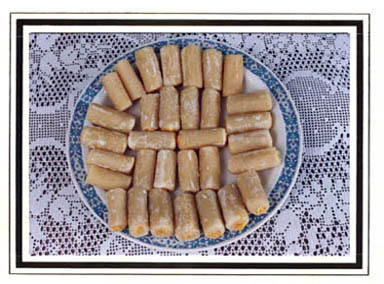
Another sign of winter: huesos del santo, little sugar-coated marzipan cookies that they make for All Saints Day. The holiday isn't until November 1, but in a bit of American-style commercialism, my bakery has begun selling them. The name translates as "saints' bones"; hence the shape. At La Tahona, they come scored like rotini, and with candied chestnuts, apple, or sweet potato where the marrow would be. My favorite, though, are filled with yema--sweetened egg yolk, which should be disgusting, but isn't.
Saturday, October 22, 2005
Feria de los Sentimientos
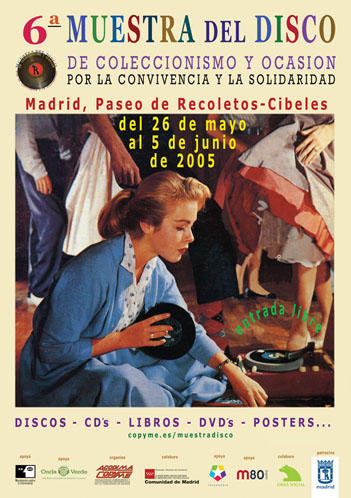
Walking through the Plaza Mayor this afternoon after two weeks' absence, I was reminded of how dearly the Spanish love a fair. And not just the big ones, that have them dressing up in costumes and drinking til all hours of the morning. Small ones--Feria of the Book, Feria of Used Tchotkes, Feria of Solidarity--all it takes is a few white tents and large speakers. Once, Geoff and I, crossing the Plaza Mayor early on a Saturday morning, were surprised by workers setting up what, for all intents and purposes, appeared to be a Feria of Disease. (In truth, they may have called it a health fair). Flocks of white tents filled the square, each one dedicated to a single, horrifying condition. There was a pancreatic cancer booth, a heart disease booth, even a leprosy booth. Not much action outside that one.
So it was with some curiosity that I entered the roped-off area of today's Feria of Feelings. I pictured graphic goings-on in the tents: wailing, hysterical laughter, screams of pain. But instead it was a children's fair, complete with inflatable Moonwalk (strangely called an "American court") and guys making balloon animals. There were some banners that listed various feelings, and among them "tolerance" and "phobias" were especially prominent, leading me to believe that this fair, like so many Spanish ones, had some subtle political statement to make. I just couldn't figure out what it was.
Friday, October 07, 2005
Eating in Salamanca: Zazu
I was in Salamanca yesterday, with time left over for lunch. My plan had been to take a cab directly to Chez Victor, which I had loved--especially a dessert whose only feature I remember is its luscious caramel sauce--when I ate there many years ago with my mom. But when I got there yesterday, it suddenly occurred to me that Chez Victor was probably expensive, and there was no menu outside to persuade me otherwise. So I opted instead for what looked to be a very charming, and far more economical, restaurant around the corner, called Zazu.
And it was charming, in its way, with deep blue walls and windows open on the Plaza de la Libertad. The restaurant called itself "Mediterranean", which translated mostly as Italian, with a few Spanish touches thrown in. I ordered the menu del dia (salad, pasta, dessert, wine, 12 euros) and asked for a glass of water, which in Spain always mean tap water. The waiter--long, dark hair, a little less than fastidious--said, "Of course," and then proceeded not to bring it. When I asked him again, some 20 minutes later, he said, "Sure, but we only have bottles." And then he brought the loud British lady next to me a glass of tap water for her medicine.
Salad was one of those weird concoctions with random vegetables (steamed carrots, raw celery) thrown in with the too-sweet dressing. But the gnocchi with chicken, bacon, arugula and sun-dried tomatoes came together well. Still, I found myself wishing I had stayed with my first impulse.
Zazu is at Plaza de la Libertad, 8, in Salamanca.
And it was charming, in its way, with deep blue walls and windows open on the Plaza de la Libertad. The restaurant called itself "Mediterranean", which translated mostly as Italian, with a few Spanish touches thrown in. I ordered the menu del dia (salad, pasta, dessert, wine, 12 euros) and asked for a glass of water, which in Spain always mean tap water. The waiter--long, dark hair, a little less than fastidious--said, "Of course," and then proceeded not to bring it. When I asked him again, some 20 minutes later, he said, "Sure, but we only have bottles." And then he brought the loud British lady next to me a glass of tap water for her medicine.
Salad was one of those weird concoctions with random vegetables (steamed carrots, raw celery) thrown in with the too-sweet dressing. But the gnocchi with chicken, bacon, arugula and sun-dried tomatoes came together well. Still, I found myself wishing I had stayed with my first impulse.
Zazu is at Plaza de la Libertad, 8, in Salamanca.
Wednesday, October 05, 2005
Things Done and Undone
Here is the list of things I hoped to accomplish on this last trip to Asturias:
Here is the list of things I actually accomplished on this last trip to Asturias:
Part of the problem is that everyone has opinions that, when you hear them, seem perfectly rational, but that actually end up leading you down another horrifically torturous alley of bureaucracy and mystification. You know it's going to happen, of course, but it sucks you in nonetheless. "Why don't you connect from the factory?" asks Alfonso. "Why don't you have them lay the line underground?" says the unknown (and unasked) man at the bar. "Why don't you go to the industrial office in Oviedo and tell them to get all the permissions?" says Fernando, owner of Casa Fernando restaurant. Even I knew enough not to follow that trail, but six days later, it's a pretty short list of accomplishments with which to content myself.
- Get the car inspected
- Get the car registered
- Get permission from all concerned to put electrical posts on their property
- Get permission from the local government to put electrical posts along the road to the molino
- Deposit the money so that Viesgo will connect us to the electrical system
- Get the hot water heater fixed
- Maybe do a little painting
Here is the list of things I actually accomplished on this last trip to Asturias:
- Left the car (still unrepaired) at the shop so that when I return, the rear window will have been replaced
- Got a map showing us who all the neighbors are along our prospective electrical route
- Got permission from one of them
- Made official request to local government for permission to put up electrical posts
- Deposit the money so that Viesgo will connect us to the electrical system
- Got hot water heater fixed, but now it shoots huge flames whenever lit; probably needs to be re-fixed
Part of the problem is that everyone has opinions that, when you hear them, seem perfectly rational, but that actually end up leading you down another horrifically torturous alley of bureaucracy and mystification. You know it's going to happen, of course, but it sucks you in nonetheless. "Why don't you connect from the factory?" asks Alfonso. "Why don't you have them lay the line underground?" says the unknown (and unasked) man at the bar. "Why don't you go to the industrial office in Oviedo and tell them to get all the permissions?" says Fernando, owner of Casa Fernando restaurant. Even I knew enough not to follow that trail, but six days later, it's a pretty short list of accomplishments with which to content myself.
Saturday, October 01, 2005
Mañana

Yesterday I brought the car (that's what it looks like, there on the left, only ours is charcoal gray and missing a rear window) back to Pedro, because he told me the new window would be in by then. When I got to the shop, he checked, assured me it was there, and sent me off to the cafe next door while they put it on.
It was one of those old-fashioned kinds of bars that used to be everywhere but are becoming harder to find as Spain turns more European: men coming in for beer at 9:30 in the morning, floor covered in napkins and empty sugar packets, a broken foozball table in the corner, hams hanging everywhere. And of course, both the tv and radio were blaring, as were two slot machines. I kind of liked it.
After spending an hour there reading Portrait of a Lady and drinking coffee, I went back to the shop. Pedro told me he had made a mistake: that the window that had come in was not mine. Would I like him to tape up the back with plastic?
On the good side, I picked some of our figs and apples yesterday. They are sidra apples, and hence, according to local wisdom, not good for eating. But I tried one, and thought it delicious. I would have made a pie, if only our oven worked.
Subscribe to:
Posts (Atom)